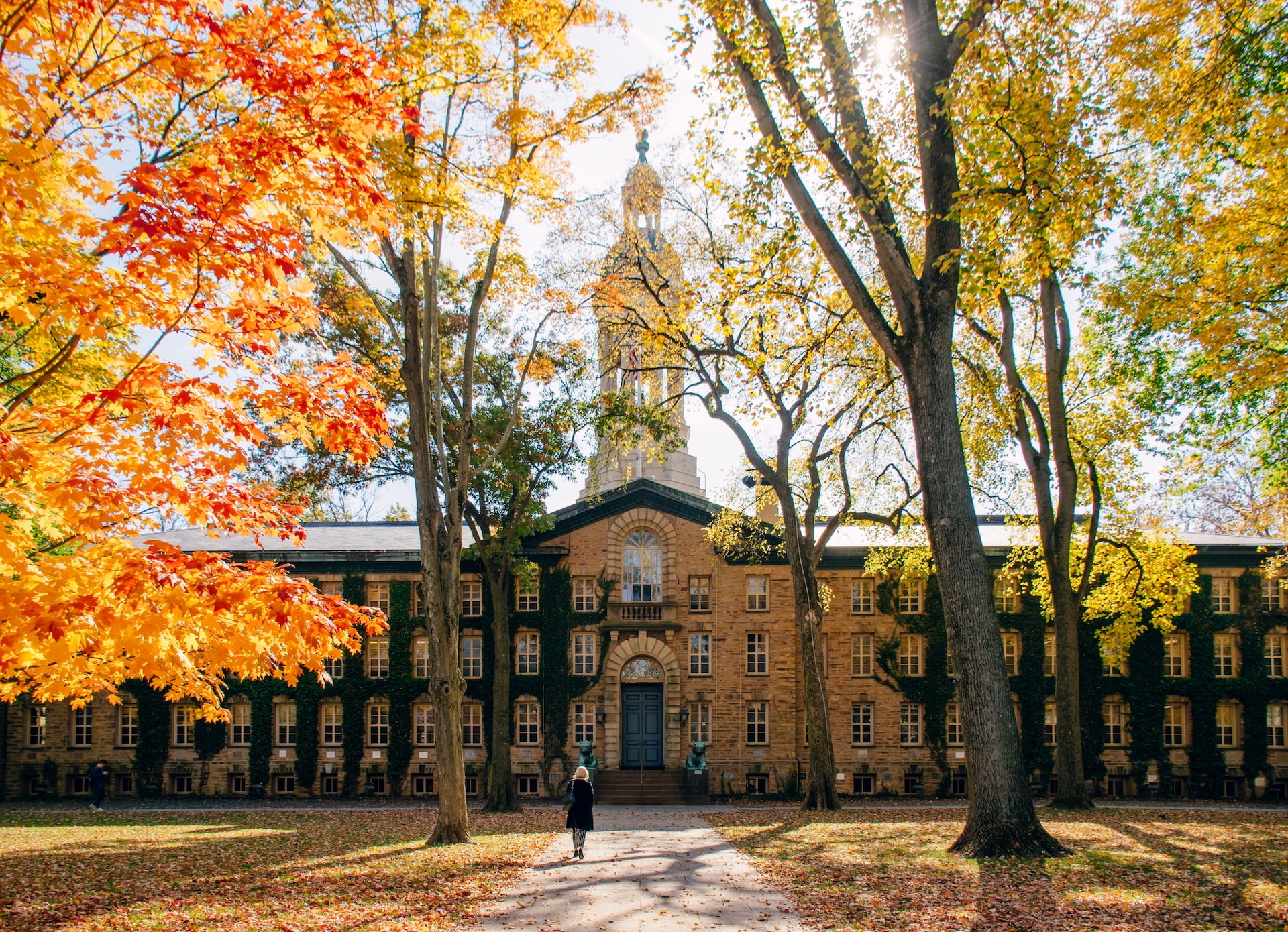
Princeton University: Unpacking the Enduring Legacy of a #1 National Ranking
Consistently hailed as the nation's premier academic institution by prestigious rankings like U.S. News & World Report, Princeton University isn't just a name; it's a benchmark for educational excellence. But what truly sets this Ivy League powerhouse apart, enabling it to maintain its coveted top spot year after year? The answer lies in a distinctive blend of historical commitment, innovative academic models, an unparalleled research environment, and a deeply integrated campus life designed for holistic student development. From its venerable roots in the American colonies to its cutting-edge contributions in the 21st century, Princeton has meticulously cultivated an ecosystem where intellectual curiosity thrives, and transformative scholarship is the norm.
The Unwavering Commitment to Undergraduate Excellence
At the heart of Princeton University's unparalleled success is its unwavering dedication to undergraduate education. Unlike many other research universities where graduate programs often overshadow undergraduate experiences, Princeton prioritizes its approximately 5,800 undergraduates, ensuring they receive an intimate, personalized, and rigorous academic journey. This commitment is tangible in several key areas:
- Small Class Sizes & Preceptorials: With a remarkably low student-to-faculty ratio, Princeton fosters an environment where students aren't just faces in a lecture hall. The university champions small class sizes and its distinctive "preceptorial" system. A preceptorial is a small, discussion-based class led by a faculty member or graduate student, designed to delve deeper into lecture material, encourage critical thinking, and facilitate lively debate. This ensures every student's voice is heard and ideas are rigorously explored, creating a direct pipeline for intellectual engagement with leading scholars.
- The Independent Senior Thesis: Perhaps the most defining feature of a Princeton undergraduate education is the mandatory independent senior thesis for all bachelor's degree candidates. This isn't merely a capstone project; it's a year-long deep dive into original research, culminating in a substantial written work. This intensive undertaking equips students with advanced research methodologies, critical analysis skills, and the ability to contribute original scholarship, preparing them for top graduate programs or intellectually demanding careers. It transforms students from passive learners into active creators of knowledge.
- Close Faculty-Student Interaction: The emphasis on small classes, preceptorials, and thesis advising naturally cultivates an extraordinary level of faculty-student interaction. Professors, many of whom are world-renowned leaders in their fields, are genuinely accessible, serving as mentors, collaborators, and guides. This proximity to brilliant minds provides invaluable mentorship opportunities and exposes students to cutting-edge research from the very start of their academic careers.
To truly appreciate the unique academic architecture that empowers Princeton students, explore the detailed breakdown of its learning model. For a deeper dive into these transformative academic pillars, read our article: Princeton Academics: Thesis, Preceptorials, & Small Class Advantage.
A Legacy of Groundbreaking Research and Innovation
While undergraduate education remains paramount, Princeton University simultaneously operates as a world-class research institution, a duality that significantly contributes to its top ranking. The synergy between its research intensity and teaching philosophy is profound. Faculty members are not just educators; they are active researchers pushing the boundaries of knowledge across the humanities, social sciences, natural sciences, and engineering.
- Nobel Laureates and Field-Defining Contributions: Princeton's roster of faculty and alumni includes numerous Nobel Prize winners, reflecting its consistent contributions to global intellectual discourse. A recent example is physicist John Hopfield, recognized in 2024 for his foundational work in machine learning and associative memory, underscoring Princeton's continued relevance in shaping emergent fields. The university has been a crucible for transformative ideas in economics, physics, chemistry, and many other disciplines for centuries.
- Focus on Doctoral-Level Training: Princeton's strategic decision to prioritize doctoral-level training over a proliferation of professional schools ensures that its graduate programs are deeply integrated with research. This approach fosters a culture of original scholarship and intellectual rigor that permeates the entire university, benefiting undergraduates through their exposure to advanced research and the cutting-edge work of their professors and graduate student mentors.
- Interdisciplinary Collaboration: The university actively promotes interdisciplinary research, breaking down traditional departmental silos to tackle complex global challenges. This collaborative spirit not only drives innovation but also provides students with a holistic understanding of issues, preparing them to lead in an increasingly interconnected world.
Holistic Development: Beyond the Classroom
A top-tier education extends far beyond textbooks and lectures, and Princeton University excels in fostering a vibrant, supportive, and intellectually stimulating campus life. The university’s approach to student life is as intentional and unique as its academic model:
- Residential Colleges: For underclassmen, campus life is organized around a system of six residential colleges. These colleges serve as more than just dormitories; they are dynamic mini-communities that provide academic advising, social programming, dining facilities, and a strong sense of belonging. This structure helps integrate new students into the university fabric, providing a supportive network and fostering lifelong friendships.
- Selective Eating Clubs: As students transition into their upperclassman years, many join one of Princeton's historic eating clubs. These private, independent organizations function as primary social and dining venues, playing a significant role in upperclass social life. While steeped in tradition, the clubs offer diverse communities, leadership opportunities, and a unique social landscape that further enriches the Princeton experience, shaping social networks and leadership skills that extend far beyond graduation.
- A Culture of Engagement: Beyond formal structures, Princeton cultivates a culture of engagement. Students are encouraged to participate in a vast array of extracurricular activities, from award-winning student publications and performing arts groups to advocacy organizations and competitive sports. This emphasis on holistic development ensures that Princeton graduates are not just academically brilliant but also well-rounded individuals with strong leadership qualities, critical social skills, and a commitment to community.
From Colonial Roots to Global Influence: A Storied History
Princeton University's journey began on October 22, 1746, when it was chartered as the College of New Jersey. This makes it the fourth-oldest institution of higher education in the United States, following Harvard, William & Mary, and Yale. Renamed Princeton University in 1896, its rich history is interwoven with the very fabric of American intellectual and political development.
- Foundational Principles: Born out of the First Great Awakening and with Presbyterian roots, Princeton was initially established to train ministers and counter perceived doctrinal deviations in existing colonial colleges. Its foundational principles can be traced back to the Log College, an informal seminary that emphasized orthodox Calvinist doctrine and personal piety. This early commitment to rigorous intellectual and moral inquiry set a precedent for academic excellence that endures to this day.
- Key Historical Moments: Nassau Hall, the university's iconic building, famously hosted the Continental Congress during the American Revolution, temporarily serving as the nation's capital. This deep connection to the birth of the United States underscores Princeton's historical significance. Over centuries, the university evolved into a secular institution, grappling with significant expansions under presidents like Woodrow Wilson, who introduced graduate education reforms, while also confronting its historical entanglements with slavery and segregationist policies – a testament to its ongoing commitment to self-reflection and progress.
Understanding Princeton's profound evolution from a colonial seminary to a modern research powerhouse offers critical insight into its enduring strength and adaptability. Learn more about this fascinating transformation in our dedicated article: Princeton's 1746 Roots: From Seminary to Secular Research Powerhouse.
Princeton University Press: Extending the Reach of Scholarship
Beyond its campus, Princeton University extends its intellectual reach globally through the Princeton University Press (PUP). Established in 1905, PUP is a leading independent, non-profit publisher dedicated to disseminating scholarship and ideas worldwide. With a mission to "bring the best and brightest to the widest possible audience," the Press plays a crucial role in the broader academic ecosystem.
- Global Dissemination of Knowledge: Having published over 14,000 books and maintaining a backlist of more than 9,000 titles, PUP is a powerhouse in academic publishing. Its program concentrates on the humanities, social sciences, and natural sciences, ensuring that groundbreaking research and influential ideas originating from Princeton and other institutions reach scholars, students, and curious readers across the globe.
- Commitment to Impact: From its first book, "Lectures on Biology" in 1906, the Press has consistently sought to publish works that make a difference. This commitment reinforces Princeton's overall mission: not just to create knowledge, but to ensure that knowledge contributes meaningfully to global understanding and progress.
Conclusion
Princeton University's consistent #1 national ranking is not a coincidence but the direct outcome of a deeply ingrained philosophy that prioritizes unparalleled undergraduate education within a world-class research environment. From its distinctive academic model centered on small classes, preceptorials, and the mandatory senior thesis, to its vibrant residential life and rich historical tapestry, every facet of Princeton is designed to foster intellectual growth, critical thinking, and holistic development. Coupled with a legacy of groundbreaking research and a commitment to global knowledge dissemination through Princeton University Press, it's clear why Princeton remains a beacon of academic excellence, continuing to shape leaders and innovators who make a profound impact on the world.